
Understanding Muda Mura Muri: The Different Types of Wastes in Lean
In the realm of Lean manufacturing and continuous improvement methodologies, understanding the three primary types
Lean Accelerator 12 Week Program | Register Today
Lean management is a philosophy and set of tools that organizations can use to improve the flow of work and eliminate waste. It has its roots in the Toyota Production System and was developed by Taiichi Ohno, who was one of the creators of the system. Lean management aims to create value for customers while minimizing waste, which can include anything from defects and rework to time spent waiting for something or someone. Organizations that adopt lean management principles often see improvements in quality, efficiency, productivity, and customer satisfaction. While it can be more challenging than traditional approaches to management, lean management offers many benefits that can help organizations thrive in today’s competitive environment.

In the realm of Lean manufacturing and continuous improvement methodologies, understanding the three primary types

In the rapidly evolving educational landscape, the merging of online courses with real-world projects marks


Understanding the connection between business and management is crucial for any successful enterprise. Business refers

Project management is the process of planning, organising, and managing resources to achieve specific

It can be difficult to slow down and be present in an ever-changing and fast-paced world. However, it is essential

Many companies simply miss the mark in way of corporate training programs. Busy managers are

“All we are doing is looking at the timeline, from the moment the customer gives

Optimizing your business processes is essential for achieving maximum efficiency and profit. In this article, we will discuss what business

A 2018 study revealed that it takes job hunters approximately five months to find a new position. The job market

If you want to advance in your career and have some exciting career development goals to consider, then you need

Operation management consulting helps businesses streamline their operations and enhance efficiency. This article covers what it includes, its main focus

In the realm of Lean manufacturing and continuous improvement methodologies, understanding the three primary types of wastes is crucial for

Interested in Lean training UK? Learn how it can enhance your problem-solving skills, connect you with industry experts, and open

A lean six sigma initiative is only as good as the data that supports it. A minimum sample size of

Understanding the connection between business and management is crucial for any successful enterprise. Business refers to the activities involved in

Project management is the process of planning, organising, and managing resources to achieve specific goals. It involves creating and

The Quality Assurance Society (QAS) is a 501(c)(3) not-for-profit professional membership organization committed to the development, promotion, and advancement of

“All we are doing is looking at the timeline, from the moment the customer gives us an order to the

The majority of our certified learners all claim that earning a Lean Six Sigma certification gives them a lot of

In the realm of Lean manufacturing and continuous improvement methodologies, understanding the three primary types of wastes is crucial for any organisation striving for operational excellence. In broader waste management practices, biodegradable waste, which includes organic materials that decompose naturally through microorganisms, sunlight, and oxygen, plays a significant role. These wastes, known as Muda, Muri, and Mura, represent non-value-adding processes, overburdening of employees or machines, and unevenness in workload or production flow respectively. These are the three types, or three categories, of inefficiency as defined in the Toyota Production System (TPS), a foundational methodology for Lean management. The three concepts—Muda, Mura, and Muri—are fundamental to Lean and are used by companies to improve efficiency, reduce waste, and foster continuous improvement. Having a sense of all three concepts is essential for effective process improvement, as it enables organisations to holistically identify and address inefficiencies. Identifying and eliminating these wastes can significantly enhance efficiency, reduce costs, and improve overall productivity. Let’s delve deeper into each of these types to uncover how they can affect an organisation’s performance and what strategies can be employed to mitigate their impact.

In the rapidly evolving educational landscape, the merging of online courses with real-world projects marks a significant advancement towards agile learning. This approach not only facilitates a deeper understanding of theoretical knowledge through practical application but also enhances skills crucial for today’s dynamic workforce. Engaging in projects that mimic real-world scenarios enables learners to develop problem-solving abilities, teamwork, and adaptability, making them more competitive and prepared for future challenges. This fusion of digital learning with tangible experiences presents a formidable strategy in cultivating a versatile and resilient talent pool, ready to tackle the complexities of the modern world.

Understanding the connection between business and management is crucial for any successful enterprise. Business refers to the activities involved in producing, buying, or selling goods or services with the aim of generating profits. Management, on the other hand, is the art of planning, organising, leading, and controlling an organisation’s resources to achieve specific goals. Both concepts are intrinsically linked; effective management practices are vital for a business to thrive and grow. By aligning strategic objectives with efficient operational processes, organisations can optimise performance across all levels. This synergy between business activities and management strategies facilitates not only profitability but also sustainable long-term growth.
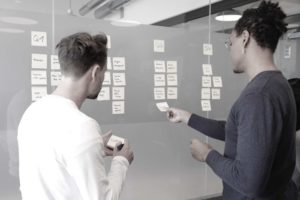
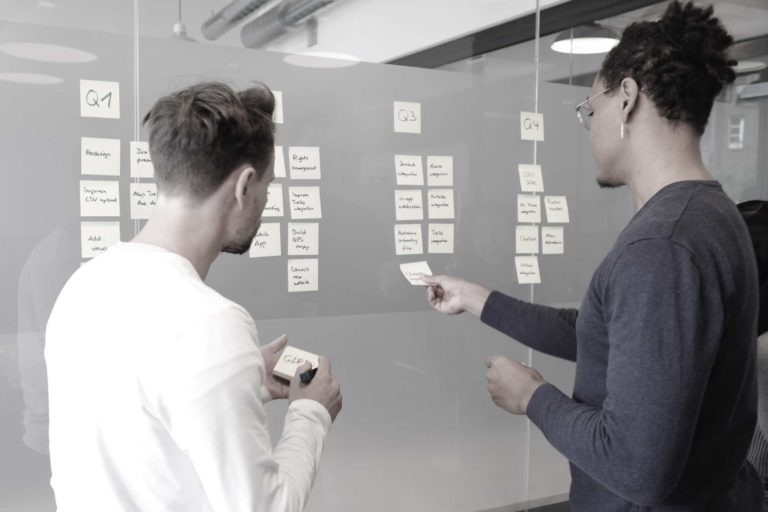
Project management is the process of planning, organising, and managing resources to achieve specific goals. It involves creating and maintaining a project timeline, budget, and scope while ensuring that tasks are completed within the set guidelines. The key elements of project management include setting clear objectives, creating a detailed plan for completing the project, determining which resources will be required to complete the work, assigning roles and responsibilities to team members, managing progress throughout the project’s duration, and evaluating results upon completion. With these key elements in place, projects can be successfully delivered on time with desired outcomes.

It can be difficult to slow down and be present in an ever-changing and fast-paced world. However, it is essential

Many companies simply miss the mark in way of corporate training programs. Busy managers are sent on business writing skills, and conflict resolution courses that have little or no impact on either the organisation or the employee. We learn best when our learning helps solve immediate issues that we are facing and when feedback is quick to accelerate our learning.
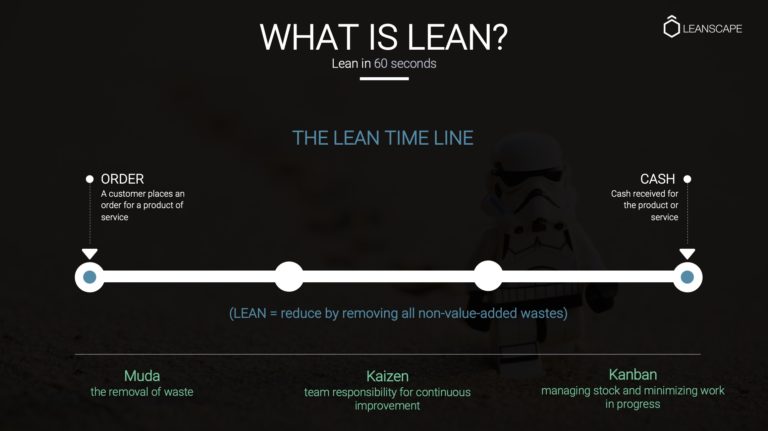
“All we are doing is looking at the timeline, from the moment the customer gives us an order to the point when we collect the cash. And we are reducing that timeline by removing the non-value-added wastes”.

Optimizing your business processes is essential for achieving maximum efficiency and profit. In this article, we will discuss what business

A 2018 study revealed that it takes job hunters approximately five months to find a new position. The job market
If you want to advance in your career and have some exciting career development goals to consider, then you need

Operation management consulting helps businesses streamline their operations and enhance efficiency. This article covers what it includes, its main focus

In the realm of Lean manufacturing and continuous improvement methodologies, understanding the three primary types of wastes is crucial for

Interested in Lean training UK? Learn how it can enhance your problem-solving skills, connect you with industry experts, and open

A lean six sigma initiative is only as good as the data that supports it. A minimum sample size of

Understanding the connection between business and management is crucial for any successful enterprise. Business refers to the activities involved in
Project management is the process of planning, organising, and managing resources to achieve specific goals. It involves creating and
The Quality Assurance Society (QAS) is a 501(c)(3) not-for-profit professional membership organization committed to the development, promotion, and advancement of
“All we are doing is looking at the timeline, from the moment the customer gives us an order to the

The majority of our certified learners all claim that earning a Lean Six Sigma certification gives them a lot of
Take our short quiz to find out which Lean Six Sigma Course is right for you.
Ready to start your journey into the world of Lean with this free course?
FREE COURSE
A Lean focused continious improvement certification course
only £119
Propel your career forward, tackle complex problems and drive change
Only £167
Become an expert in change management and complex problem-solving.
Only £1649
Take our short quiz to find out which of our courses is right for you.
Whether you’re looking for more information or you’re ready to start a project, we’re ready to help.
Email: enquiry@leanscape.io
Europe: +351 912 232 199
UAE: +971 55 662 8443