
01 – Don’t Kill Momentum | Change Management | Principles of Lean
Changing programs can be a daunting task, but building momentum is key to making the

Lean Accelerator 12 Week Program | Register Today
Lean management is a philosophy and set of tools that organizations can use to improve the flow of work and eliminate waste. It has its roots in the Toyota Production System and was developed by Taiichi Ohno, who was one of the creators of the system. Lean management aims to create value for customers while minimizing waste, which can include anything from defects and rework to time spent waiting for something or someone. Organizations that adopt lean management principles often see improvements in quality, efficiency, productivity, and customer satisfaction. While it can be more challenging than traditional approaches to management, lean management offers many benefits that can help organizations thrive in today’s competitive environment.

Changing programs can be a daunting task, but building momentum is key to making the

The main difference between Lean and Six Sigma is the focus of each. Lean is

Lean Six Sigma is a highly effective and efficient tool for businesses to achieve success.

The 5-Why Problem Solving Technique is an effective way of troubleshooting and problem solving by

“Standardise what you do to create the space you need to change what you do.” If you and

Visual management is becoming increasingly important in today’s business world as companies strive to manage their operations and resources effectively.

With technology advancing so fast, evaluating the impact technology will have on the culture of the organisation in the short

“Culture is simply a shared way of doing something with a passion.” – Brian Chesky, Co-Founder, CEO, Airbnb As a

The Lean supply chain relies on value creation – not just price reduction. All too often, we identify the partners

Genchi Genbutsu is a Lean methodology, which focuses on seeing and understanding the actual work of a process or system

“Make decisions slowly by consensus, thoroughly considering all options; implement decisions rapidly.” – The Toyota Way All too often, we

The 8 wastes of Lean TIMWOODS are a powerful set of tools that can help organisations become more efficient and

Kaizen, the Japanese concept of continuous improvement, is a philosophy that encourages ongoing, incremental changes that cumulatively lead to significant

Changing programs can be a daunting task, but building momentum is key to making the transition smoother. By gradually introducing new processes and procedures, employees can adapt at their own pace and feel more comfortable with the changes. Building momentum also helps to establish a sense of purpose and direction, which can motivate employees to stay committed to the new program. Additionally, momentum can help to identify potential roadblocks and challenges early on, allowing for timely adjustments and problem-solving. Overall, building momentum is crucial for a successful transition to a new program.
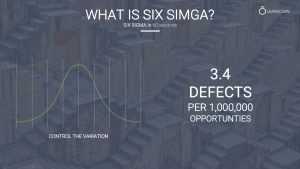
The main difference between Lean and Six Sigma is the focus of each. Lean is focused on reducing waste and increasing efficiency, while Six Sigma is focused on reducing defects and eliminating variability in processes. Lean emphasizes the need to identify and eliminate non-value-added activities from any process. At the same time, Six Sigma focuses on identifying the root causes of issues within a process and solving them through data-driven decisions.

Lean Six Sigma is a highly effective and efficient tool for businesses to achieve success. It enables organizations to identify and eliminate waste in order to increase profitability, productivity, quality, and customer satisfaction. Through the application of Lean Six Sigma principles and tools, businesses are able to reduce costs, optimize processes and improve customer service which leads to higher revenue and profits. This system also allows companies to understand their customers’ needs better to provide better products/services in an ever-changing marketplace. In short, Lean Six Sigma provides businesses with an efficient way to reduce waste while improving overall performance.

The 5-Why Problem Solving Technique is an effective way of troubleshooting and problem solving by asking a series of five “why” questions. The goal is to drill down to the root cause of the problem, rather than accepting surface explanations. The technique involves beginning with a symptom or problem statement, and then asking subsequent “why” questions about it each time. This repetitive process can help identify the source of the issue and provide insights into how best to address it.

“Standardise what you do to create the space you need to change what you do.” If you and

Visual management is becoming increasingly important in today’s business world as companies strive to manage their operations and resources effectively.

With technology advancing so fast, evaluating the impact technology will have on the culture of the organisation in the short

“Culture is simply a shared way of doing something with a passion.” – Brian Chesky, Co-Founder, CEO, Airbnb As a

The Lean supply chain relies on value creation – not just price reduction. All too often, we identify the partners

Genchi Genbutsu is a Lean methodology, which focuses on seeing and understanding the actual work of a process or system

“Make decisions slowly by consensus, thoroughly considering all options; implement decisions rapidly.” – The Toyota Way All too often, we

The 8 wastes of Lean TIMWOODS are a powerful set of tools that can help organisations become more efficient and

Kaizen, the Japanese concept of continuous improvement, is a philosophy that encourages ongoing, incremental changes that cumulatively lead to significant
Take our short quiz to find out which Lean Six Sigma Course is right for you.
Ready to start your journey into the world of Lean with this free course?
FREE COURSE
A Lean focused continious improvement certification course
only £119
Propel your career forward, tackle complex problems and drive change
Only £167
Become an expert in change management and complex problem-solving.
Only £1649
Take our short quiz to find out which of our courses is right for you.
Whether you’re looking for more information or you’re ready to start a project, we’re ready to help.
Email: enquiry@leanscape.io
Europe: +351 912 232 199
UAE: +971 55 662 8443